
Every month, a new D2C brand launches in India or the UAE with the same playbook: run aggressive Meta ads, offer a steep first-order discount, celebrate the spike in GMV, and call it growth.
Six months later, they're burning through investor capital, their CAC has tripled, and no one can explain why the unit economics don't work.
The playbook isn't a strategy. It's a trap.
This isn't a post about cutting ad spend or going organic-only. It's a blueprint for building a D2C brand that actually compounds — where every new customer you acquire is profitable, every repeat purchase deepens your moat, and growth and profit reinforce each other rather than trade off.
The Performance Marketing Trap

The biggest mistake D2C founders make is treating paid acquisition as the growth engine rather than an amplification tool.
Here's the problem in practice: a brand launches with a 40% off first-order discount and Meta ads targeting broad audiences. The cost per acquisition is Rs. 800 on paper. But after accounting for product COGS (35%), shipping (8%), payment gateway fees (2%), and a 25% return rate, that customer actually costs Rs. 1,400 to acquire.
The math only works if that customer comes back — at least 3 times within 90 days. But most brands have no retention infrastructure in place. They're acquiring one-time buyers at a loss and calling it a win because the ROAS dashboard looks healthy.
The rule: Paid ads should fund growth, not generate it. Your growth should be funded by repeat purchases, referral revenue, and organic channels — Meta ads accelerate that flywheel, they don't replace it.
Mistake #1: Ignoring Unit Economics From Day One
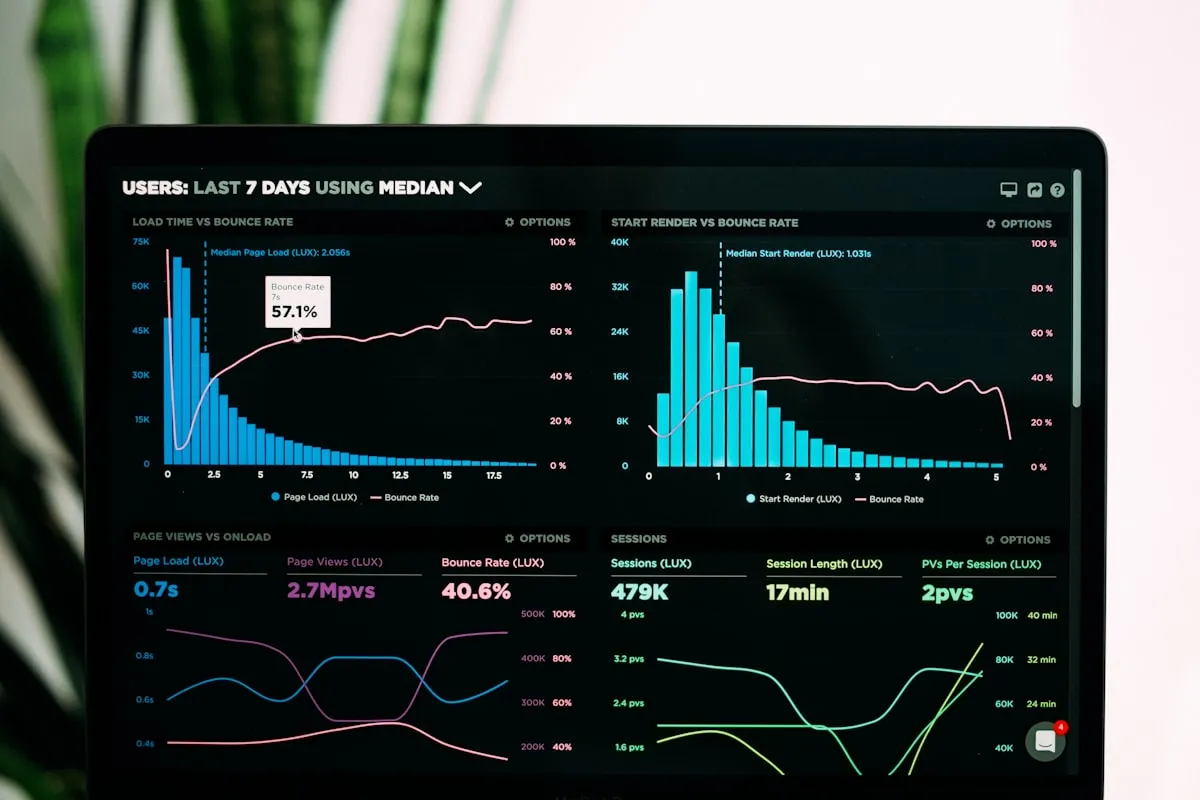
The most lethal D2C mistake is optimizing for top-line revenue while ignoring contribution margin per order.
Here's the formula you need to know:
Contribution Margin = Order Revenue − COGS − Fulfillment − Advertising Cost − Returns
For most Indian D2C brands operating at scale, this number is negative on first purchase. That is acceptable — but only if your repeat purchase rate is above 40% within 60 days and your average order value increases over time.
The brands that survive don't hide from this math. They build it into their business model from the start.
The metrics that actually matter
| Metric | Why it matters | Target for early-stage D2C |
|---|---|---|
| CAC Payback Period | How fast you recoup acquisition cost | Under 60 days |
| LTV:CAC Ratio | Total value extracted vs cost to acquire | 3:1 or higher |
| Repeat Purchase Rate (60d) | First-purchase buyers who return | Above 40% |
| Average Order Value | Revenue per transaction | Increasing over time |
| Contribution Margin % | Profit per order after all variable costs | Positive and growing |
If you're not tracking these five numbers every week, you don't know if you're building a business or a marketing campaign.
Mistake #2: Building on Borrowed Audiences
Most D2C brands in India and the Middle East have zero first-party data assets. Their "audience" lives inside Meta's platform — a pixel, a custom audience, a lookalike. Meta owns that relationship.
When iOS 14+ hit in 2021, when CPMs spike during festival seasons, when a competitor outbids you — your business disappears because you never owned the customer relationship.
The brands that scale: They build email and SMS lists from the first sale. They use paid ads to acquire customers, then immediately move those customers into an owned channel where the cost per message drops to near zero.
A brand with a 50,000-person email list and a 15,000-person SMS list has a free acquisition channel that doesn't depend on algorithm changes or ad budgets.
The owned channel ladder
- Email — Highest reach, lowest cost. Every new customer gets a welcome sequence. Drip campaigns for 30/60/90 day inactive segments.
- SMS — Higher open rate than email. Used for flash sales, new arrivals, and transactional updates. Requires explicit consent.
- WhatsApp — For brands in India, WhatsApp is an owned channel that competitors can't target against. Use it for order updates and exclusive early access.
- App (optional) — Only makes sense if your product has natural frequency (supplements, consumables, personal care). The development cost is high; don't build an app for the sake of building one.
Mistake #3: Trying to Win Every Channel at Once

The founders who spread their budget across Meta, Google, YouTube, influencer campaigns, and affiliate programs simultaneously are the ones who complain that "digital marketing doesn't work."
The reason it doesn't work is because they're never giving any channel enough signal to learn.
The right approach: Pick one acquisition channel, go deep, achieve profitability at that channel, then expand.
For most D2C brands in 2025, that means starting with Meta (Facebook + Instagram) because:
- The audience targeting is the most precise
- The creative testing velocity is highest
- The reporting and optimization frameworks are most mature
- The feedback loop (data → creative → conversion) is fastest
Once you've cracked Meta — meaning you can acquire customers profitably and replicate that across new ad sets — then layer in Google (Shopping, PMax), YouTube, or retargeting.
The channel sequencing framework
- Months 0-6: Master one channel (Meta). Build email/SMS infrastructure.
- Months 6-12: Scale profitable Meta audiences. Start testing Google.
- Months 12-18: Expand to secondary channels. Build referral program.
- Month 18+: Organic content feeds the funnel, paid scales it.
Mistake #4: Discounting as a Growth Strategy
If you're running D2C in India, you've seen the 50% off sale culture. Every brand under the sun runs "Buy 1 Get 1" offers and "Flat 40% off" campaigns. This is one of the fastest ways to destroy brand value and train customers to never pay full price.
Discounting communicates one thing to the market: your product isn't worth the regular price.
The brands that command loyalty and repeat purchases in India aren't the ones running constant sales. They're the ones that created a reason for their customers to come back — better product, community, exclusivity, or experience.
The alternatives to discounting:
- Free shipping on orders above a certain threshold (preserves margin, increases AOV)
- Early access to new products or collections (builds loyalty, not discounting)
- Bundles — Offer more value at a better margin without cutting price
- Loyalty points — Reward repeat purchases, not first-time ones
Mistake #5: Building a Brand That Can't Scale Past the Founder
Most early-stage D2C brands are held together by the founder's personal involvement — the founder picks the creative, manages the ad accounts, handles supplier relationships, and runs customer service on WhatsApp.
This works at sub-₹50 lakh monthly revenue. It breaks at ₹2 crore. And it completely falls apart at ₹5 crore+.
The fix: Systematize before you scale.
- Creative: Build a brand guidelines document. Define your visual language, tone of voice, and campaign structure so any designer or editor can execute without you.
- Ad account: Document your campaign structure, audience logic, and optimization playbook in a shared system (Notion, Loom, internal wiki).
- Customer service: Set up a ticketing system, write FAQ responses, create a returns policy — before the volume makes it impossible to handle manually.
- Fulfillment: Red flag every bottleneck before it becomes a crisis. Shipping delays are the fastest way to kill repeat purchase intent.
The D2C Growth Blueprint in Practice

Here's what this looks like in reality. A D2C skincare brand in India launches in January with:
- ₹10 lakh ad budget (Month 1)
- 35% product margin, ₹800 AOV
- Paid acquisition focus on Instagram + Facebook
- Email capture from checkout (5% opt-in rate)
- Welcome sequence, no discounting
By Month 6:
- CAC payback period: 45 days (within target)
- 35% of customers make a second purchase (within target)
- Email list: 8,000 subscribers
- AOV increased to ₹1,200 via bundle strategy
- Contribution margin: positive, growing
By Month 12:
- Meta ad efficiency has plateaued — Google Shopping launched
- Referral program launched (customer referral incentive)
- Repeat purchase rate: 44% within 60 days
- Email revenue: ₹3 lakh/month (free channel, 0 CAC)
This isn't a fantasy. It's what happens when you apply the blueprint from the start — not after you've burned through your runway.
Frequently Asked Questions
How do I know if my D2C brand is profitable enough to scale?
The fastest check: calculate your CAC payback period and LTV:CAC ratio. If you can recoup your acquisition cost within 60 days and your customers generate 3x their acquisition cost over their lifetime, you're ready to scale. If either number is off, you need to optimize before you grow.
What's the ideal customer acquisition cost for a D2C brand in India?
It depends on your category and average order value. As a rule of thumb, your CAC should not exceed 20% of your average order value on first purchase. For a brand with ₹800 AOV, that means CAC should stay under ₹160 on the first order — the rest of the economics comes from repeat purchases.
How do I reduce my dependency on paid ads?
Build your owned channels first (email, SMS), then use paid ads to acquire new customers and move them into those channels. Every new subscriber should enter an automated sequence that keeps them engaged until they're ready to buy again. The compounding effect kicks in when your email list grows large enough to generate meaningful weekly revenue.
How important is repeat purchase rate for D2C brands?
Critically important. First-purchase buyers are almost always unprofitable — that's the cost of acquiring a new customer. Repeat purchases are where the unit economics turn positive. A brand with a 20% repeat purchase rate will always have worse unit economics than a brand with a 45% repeat purchase rate, even if their ad performance is identical.
Ready to Build a D2C Brand That Compounds?
If your D2C brand is stuck in the growth trap — chasing scale while the unit economics quietly deteriorate — it's not too late to reset.
At DEXO Media, we work with D2C brands across India and the Middle East to build performance marketing strategies that fund sustainable growth rather than chase vanity metrics.
Book a free 30-minute strategy call and let's look at your numbers together.